
How to Find the Right Keynote Speaker (2027 Guide)
November 12, 2026
Your choice of keynote speaker will make or break your event.
I've been a professional speaker for years, and have seen events - and the planners behind them - succeed and fail based on the keynote speaker.
In this article, I’ll show you how to search for speakers, critique your options, handle pricing and ultimately select the best talent for your event. I'll do so in five sections:
1. How to Search for a Speaker
2. How to Ensure the Speaker is the Right Fit
3. How to Start the Conversation With the Speaker
4. How to Negotiate With the Speaker
5. How to Set the Speaker Up for Success
Here are the best ways to discover the right keynoter for your event:
Use Google to Find a Speaker
A simple Google search is often the best starting point.
Let’s say you’re seeking a speaker who can inspire your managers to be better leaders. You could search for “leadership keynote speaker.”
This is a fairly broad search that will get you many options - mostly paid results, directories and then the websites of individual keynoters. You’ll get some great speakers in your results but they’ll likely be expensive speakers that are paying for Google Ads or SEO.

If you’re looking for more budget-friendly results, go for a long-tail keyword like “leadership keynote speaker for companies in Kansas City.” A more detailed query like this will narrow the search and likely give you better results.
Adding geographic terms to your query can help highlight presenters in your area. While this typically isn't necessary (most professional speakers are happy to travel for the right gig), it can lower the travel costs and potentially increase the chances the event works for the speaker's schedule.
How to Find an Event Speaker on LinkedIn
LinkedIn can also be a good place to find a speaker. Start by entering your query, for example, “leadership keynote speaker," then search. Next, click “People” to narrow down your search to individuals. You can then click the “All Filters” button and narrow your search. If you want to see if any keynoters are direct connections of yours, click “1st.” Clicking “2nd” will reveal speakers who are connected with your direct connections - which may allow you to reach out to one of your connections and ask about the quality of the speaker. You can also sort by location, industry, services and more.

How to Use YouTube to Discover a Keynote Speaker
YouTube is a valuable resource for discovering potential event speakers if you prefer visual content. Searching for "keynote speaker" can be a starting point, but refining your search with specific keywords like "industry," "topic," or "event type" will yield more specific speaker reels.
Speaking reels provide invaluable insights into a keynoter's quality. All professional speakers should have one. They offer a great visual showcase of the speaker's dynamism, stage presence, and communication style (more details about speaking reels below).

To gain a deeper understanding of a potential speaker's expertise, consider exploring their YouTube channel (again, nearly all professional speakers have one) for interviews, podcasts, or presentations. This additional research can provide valuable insights into their thought leadership.
How to Find a Keynote Speaker Via Speaker Directories
Another great option is speaker directories like Speaker Hub, the National Speakers Association, Speaker Match, and Speakers Spotlight. These directories offer filter options based on topic, industry, budget, experience and more. Most directories also allow you to compare multiple speakers side-by-side to help make your decision.

Reach out to Colleagues to Find a Speaker
Finally, you can use the old-fashioned way of discovering your main speaker: asking actual people you know.
Are any of your contacts an event planner who’ve hired speakers before? Do you know business professionals who’ve been to recent conferences? Reach out to your contacts via email, direct message or in-person. A friend's perspective may be helpful in making your decision.
Once you’ve found a speaker or two, take the time to do your research to ensure they’re the right fit.
You may have talented speaking candidates who seem to be very knowledgeable about a topic, but it’s not just their experience that counts; you want to ensure this person is going to connect with your group.
Some speakers share incredible information but are a little dry. Some are fun but irreverent. Not every speaker is right for every audience.

Carefully Review Your Speaker's Website
The first step is to review the candidate's website. Check how speakers talk about themselves, look for titles and descriptions of speeches that have been given in the past, and review photos to determine what types of groups they have spoken to. It's also a good idea to search for a speaking resume of the organizations that have hired this person for keynotes.
Finally, search the website for testimonials of those who’ve heard the presenter.
Next, look for the speaking reel.
What is a Speaking Reel?
A speaking reel is a short video demo that showcases an individual's speaking ability. A good reel can give you a great idea of how this person presents, what type of organizations he or she has spoken to, what type of energy the speaker brings, etc. Nearly every professional speaker has a speaking reel.
You can find these reels on YouTube, but most of the time, they are embedded on the speaker’s website (for instance, mine is available on YouTube and embedded on my Speaking page).
While you’re on YouTube, search for interviews, podcasts or any other videos with your potential speaker. It’s a good way to gain more insights on the speaker's expertise.
Seek a Keynote Speaker Who Has Authored a Relevant Book
Another excellent thing to consider is whether the speaker has written a book on the subject you're interested in. If so, that’s a good sign and likely means this is a legit keynote speaker.
Of course, it doesn’t guarantee that this will be the best speaker but it is a sign of someone who’s committed enough to this topic to share an entire book of expertise. Plus, I've found most audiences feel a speaker that has authored a book has more credibility - which can be especially helpful if the audience hasn't heard of the speaker before.

Engage with Individuals Who Have Listened to the Speaker
Finally, it may be helpful to seek out those who’ve recently heard this speaker.
Again, you may be able to find a list of organizations your potential speakers have spoken to on their websites. You can also check out their social media accounts which may highlight recent speaking gigs.
If you discover a recent group where this individual has given a talk, consider contacting them to gauge the speaker's effectiveness and quality.
If you’ve found someone who looks like a good fit for your keynote, the next step is to reach out. This is typically done through the speaker's website. Most have a “contact” form you can fill out.
Here’s what to include:
- Your organization
- The time and date of the event - This is important to start with because there’s no reason to begin discussions with the speaker if he or she isn’t even available.
- The location - Sometimes this is a dealbreaker for speakers so it’s good to address it early.
- The general topic
- The type of audience
- The number of people in the audience
- The duration of the speech
It's especially important to give the speaker an idea of what you’re looking for and who the audience will be. For instance, “We would like a speaker to help a group of 50 managers grow their leadership skills.” Don’t worry about being too detailed or specific at this point. It’s the speaker’s job to ask questions, narrow down and customize the topic.
Should You Include Your Budget When Contacting a Speaker?
Including your budget isn’t necessary in your initial inquiry with the potential keynote speaker.
It’s rare that an organization reaches out to me about a keynote and shares their budget with me. In most cases, an event planner looks to the speaker to provide the cost estimate.
If you prefer to get straight to the point and specify your budget, that's perfectly acceptable.
An Example Inquiry for a Potential Keynote Speaker
Here’s an example of an actual speaking inquiry I recently received through my website. I thought this event planner did a great job of getting the conversation started and letting me, the speaker, know what I need to know:
Hi Drew,
We are reaching out to confirm our interest in having you speak at our Leadership Retreat on the afternoon of Thursday, August 15th in Kansas City. The event will gather 60 of our top leaders and managers. We have been inspired by your latest book on creating a culture no one wants to leave, and we believe your insights would align perfectly with our vision. Could you please provide details on your availability and pricing? We look forward to hearing from you!
After you’ve sent your initial inquiry, the speaker should reply and set up a call with you.
It’s extremely important for the speaker to ask in-depth questions about your goals for the event, what your organization is like, details on the audience, etc. Ensure your speaker is interested, invested, and asking the right questions.
If the speaker doesn’t take the time to do the necessary homework, this person isn't right for your event.
How Much Does a Keynote Speaker Cost? (2027 Rates)
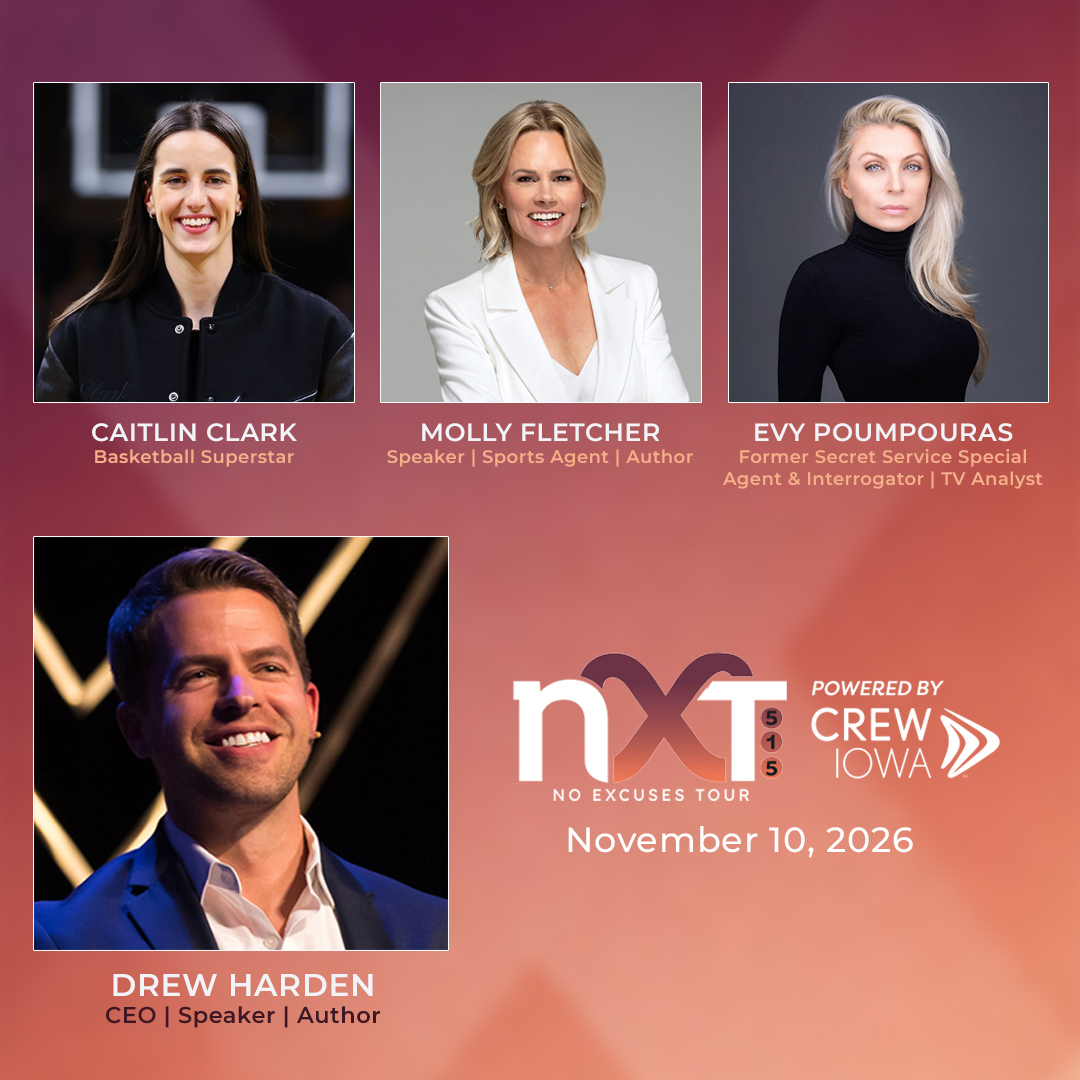
Keynote speaker rates can greatly vary. I recently spoke at a conference with Caitlin Clark and, while I didn't see her final fee, someone of her caliber asks for $100,000+ (...and no, I'm not nearly that expensive!).
Here are the speaking fees I'm seeing in the market right now:
- Inexperienced speaker - free
- Entry-level speaker - $1k - $4k
- Experienced speaker - $4k - $10k
- Known thought leader - $10k - $25k
- Full-time professional speaker - $25k - $100k
- Well-known celebrity - $100k+
Does paying more get you a better speaker? Sometimes - but not necessarily. I've seen unknown speakers outperform professionals on numerous occasions.
A well-known name can be a draw that boosts attendance, but remember - at the end of the day, if your speaker doesn't present insightful ideas and connect with attendees, they won't remember the experience.
Now that you've booked your speaker, you'll likely want a headshot, bio, and title/description of the keynote sent over to put into your promotional materials.
You should also set up a follow-up call with the speaker two or three months before the event. Up until this point, your talent has been focused on booking the gig, not the actual speech itself, so it's important to refresh the speaker's memory before the event.
Topics to Cover Before The Speech
- The main goal of the speaker - You must give the speaker a clear picture of what success looks like. For instance, you might say, "this will be a successful keynote if you keep our audience’s attention with real-life examples and give useful takeaways our managers can use to build better relationships with their teams."
- The type of audience - What type of people will be in the audience? What's the average age? Are they experienced leaders or new hires? Do they manage people? Give the speaker a clear idea of the type of people who will hear this message.
- Details of the event - Ensure the speaker is very clear on the type of event, as this can shape the keynote that's prepared. Is it a three-day conference? A luncheon? What type of sessions will happen before and after the keynote?
- Tone of the room - I was recently at an event filled with C-suite leaders. The event planner hired a comedian who hadn’t taken the time to understand the audience. She opened with crude, inappropriate humor that immediately fell flat, creating an extremely awkward experience. Don’t let this happen to you! Brief your speaker on the tone of the room beforehand. Does this group appreciate humor? Are they likely to engage with questions and participate actively? Or is this a more formal, serious event?
- Internal politics - Many groups have topics they’d rather not discuss. Give your keynote speaker a clear sense of any sensitive issues to avoid - recent layoffs, internal department conflict, a poor financial year, or other delicate subjects. I always appreciate it when the event planner helps me not put my foot in my mouth!
- Logistics - It's a good idea to refresh the speaker's memory before the event and share the location, room, time, etc. It's also helpful to cover the microphone and computer situation, who will introduce the speaker, and anything else that may help the speaker be ready at the right place and time.
Shorten Your Search and Book Me For Your Event
I hope you find these tips helpful. If I can shorten your search by serving as the speaker at your next event, simply reach out to me. I typically speak on topics like leadership and work culture. I would love to hear more about your event.